

Filing your Form I-485 is a huge milestone. You’ve likely spent months preparing, and now you have a thick packet of documents ready to go. However, all that effort hinges on one simple, yet critical, detail: Mailing it to the right place.
USCIS operates several lockboxes, and the correct one depends entirely on your specific situation. For example, your eligibility category, your state of residence, and even whether you’re using USPS or a courier like FedEx.
Get it wrong, and your application won’t be forwarded. It will be rejected outright, costing you precious time and momentum. This adds more stress, so you need to remove a major source of uncertainty.
Below, we’ve cut through the confusion with a clear, straightforward guide to finding your exact filing address. We’ll help you with the official rules so your application gets into the right hands on the first try.
At a Glance
- Where to file depends on your eligibility category and location, so get the right address right to avoid delays.
- Processing times for I-485 range from 10 to 47 months; factors like USCIS workload and your application completeness can affect this.
- Common mistakes like missing signatures, incorrect fees, and incomplete forms can lead to rejections or delays.
- Don’t miss your chance to work and travel while waiting! Apply for an Employment Authorization Document (EAD) and Advance Parole to maintain flexibility during your wait.
- Keep your address updated with USCIS! Missing Requests for Evidence (RFEs) or appointment notices can lead to big delays or complications.
What is Form I-485?

Form I-485 is officially known as the Application to Register Permanent Residence or Adjust Status. It is a crucial step in the U.S. immigration process for individuals seeking to become lawful permanent residents (LPRs).
The primary purpose of Form I-485 is to allow individuals who are physically present in the United States to apply for permanent residency. It allows eligible applicants to apply for permanent residency without having to leave the U.S. for consular processing.
This adjustment of Status ensures you can remain in the U.S. while your application is being processed.
Eligibility for Form I-485 varies depending on the applicant’s category. It is available to individuals under different immigrant categories, including:
- Family-Based Applicants: Immediate relatives of U.S. citizens (spouse, child, parent).
- Employment-Based Applicants: EB-1, EB-2, EB-3 categories, etc.
- Asylum Seekers and Refugees
- Other Special Immigrants: Certain special immigrant categories (e.g., religious workers, juveniles).
Before you seal that envelope, let’s talk about the necessary requirements. Miss one, and your application hits a wall. These criteria are vital in determining your eligibility to adjust your Status. They decide whether you can become a permanent resident while staying in the U.S.
Read Also: Income Requirements for Green Card Sponsor and Benefits for Holders
Basic Requirements for Filing Form I-485

Think you’re ready to file for your green card? Hold on. The journey starts with a simple yes/no checklist.
Ensuring you meet these basic requirements for Form I-485 is the critical first step that every successful application shares. Let’s make sure yours is one of them:
Physical Presence in the U.S.
To begin the adjustment of status process, you must be physically present in the United States. If you are abroad, you will need to go through consular processing at a U.S. embassy or consulate.
Lawful Entry
Your next requirement is that you must have entered the United States legally. This means you must have been admitted or paroled into the U.S. with valid documentation.
Availability of Immigrant Visa
One of the most important aspects of filing Form I-485 is ensuring that an immigrant visa is immediately available to you.
- Immediate Relatives of U.S. Citizens: If you are an immediate relative (such as a spouse or parent of a U.S. citizen), you can file Form I-485 concurrently with the I-130 petition.
This means you don’t have to wait for a visa number because there’s always one available for immediate relatives.
- Family Preference Categories: If you belong to a family preference category, such as siblings or married children of U.S. citizens, you will need to wait.
You must wait for your priority date to be current in the U.S. Department of State’s visa bulletin before submitting your Form I-485.
Ready to start your green card journey? Contact the Law Offices of Sweta Khandelwal today for support throughout your adjustment of status process.
Okay, the hard part of checking requirements is done. Now for the stressful part: Waiting while the government does its thing.
However, you won’t be left in the dark. Let’s understand the exact steps USCIS will take from the moment they open your envelope until they make a final decision.
So you can stop refreshing your status tracker and know what to genuinely expect.
The Adjustment of Status Process

The USCIS adjustment of status process follows a strict protocol. While timelines vary, the sequence of events does not. Understanding this protocol is key to maintaining confidence and compliance throughout your case.
Below is the official workflow, decoded into actionable stages.
Step 1: Filing the I-485 Application
The first step is submitting your Form I-485. Along with the form, you’ll need to submit various supporting documents to prove your eligibility.
Here’s a list of the main forms you’ll need:
- Main Forms to Include:
- I-485: The main application form for adjustment of Status.
- I-130/I-130A: If applying as a family-based applicant, include the Petition for Alien Relative (I-130) and the I-130A supplement (if applicable).
- I-140: If you’re applying through employment, you’ll need to include the Immigrant Petition for Alien Worker (I-140).
- I-864: Affidavit of Support, required for family-based applicants to prove the sponsor can financially support you.
- I-765: Application for Employment Authorization (optional, but needed if you want to work while waiting for your green card).
- I-131: Application for Travel Document (optional, but needed if you want to travel while your application is pending).
- I-693: Report of Medical Examination and Vaccination Record, required to show that you meet health requirements.
- Supporting Documents:
- Proof of lawful entry (for example, your I-94 or visa stamp).
- Birth certificate, passport, and marriage certificate (if applicable, add Proof of Bona fide Relationship ).
- Financial documentation such as tax returns and pay stubs (to support your I-864).
It’s crucial to make sure all documents are correctly filled out and submitted together to avoid delays.
Step 2: Biometrics Appointment
After submitting your Form I-485, you’ll be scheduled for a biometrics appointment. This is when USCIS will collect your fingerprints, photo, and signature for a background check.
The biometrics appointment is a standard part of the process and helps ensure that the U.S. government has the necessary information to conduct security and criminal background checks.
Step 3: USCIS Adjudication
Once your biometrics have been processed, USCIS will move to the adjudication phase. This is where your application will be reviewed in detail, and you may be called in for an interview if necessary.
A USCIS officer will ask questions to confirm the information on your application and assess your eligibility.
Step 4: Receiving Your Green Card
If all goes well and your application is approved, the final step is receiving your permanent resident card (green card). Once approved, USCIS will mail your green card to you, officially granting you lawful permanent resident Status in the U.S.
General Guidance
- Type or print answers in black ink only.
- Submit photocopies of documents unless originals are specifically requested.
- Certified English translations are required for any foreign-language documents.
- Personal Information: Fill out your legal name, address, and Social Security number (if applicable).
- Immigration History: Provide details about your most recent entry to the U.S. and your current immigration status.
Completing Form I-485 may seem like a lot, but when you carefully follow the instructions, the process will go much more smoothly.
You might think mailing your application is the easiest part. Because all you need to do is send it to “USCIS,” right? Wrong.
The correct lockbox facility depends on your specific situation, and getting it wrong guarantees costly delays. Let’s cut through the confusion and map your application’s route to the right desk.
Read Also: Family-Based Green Card Through Marriage Processing Time
Where to File I-485: Know the Right Addresses
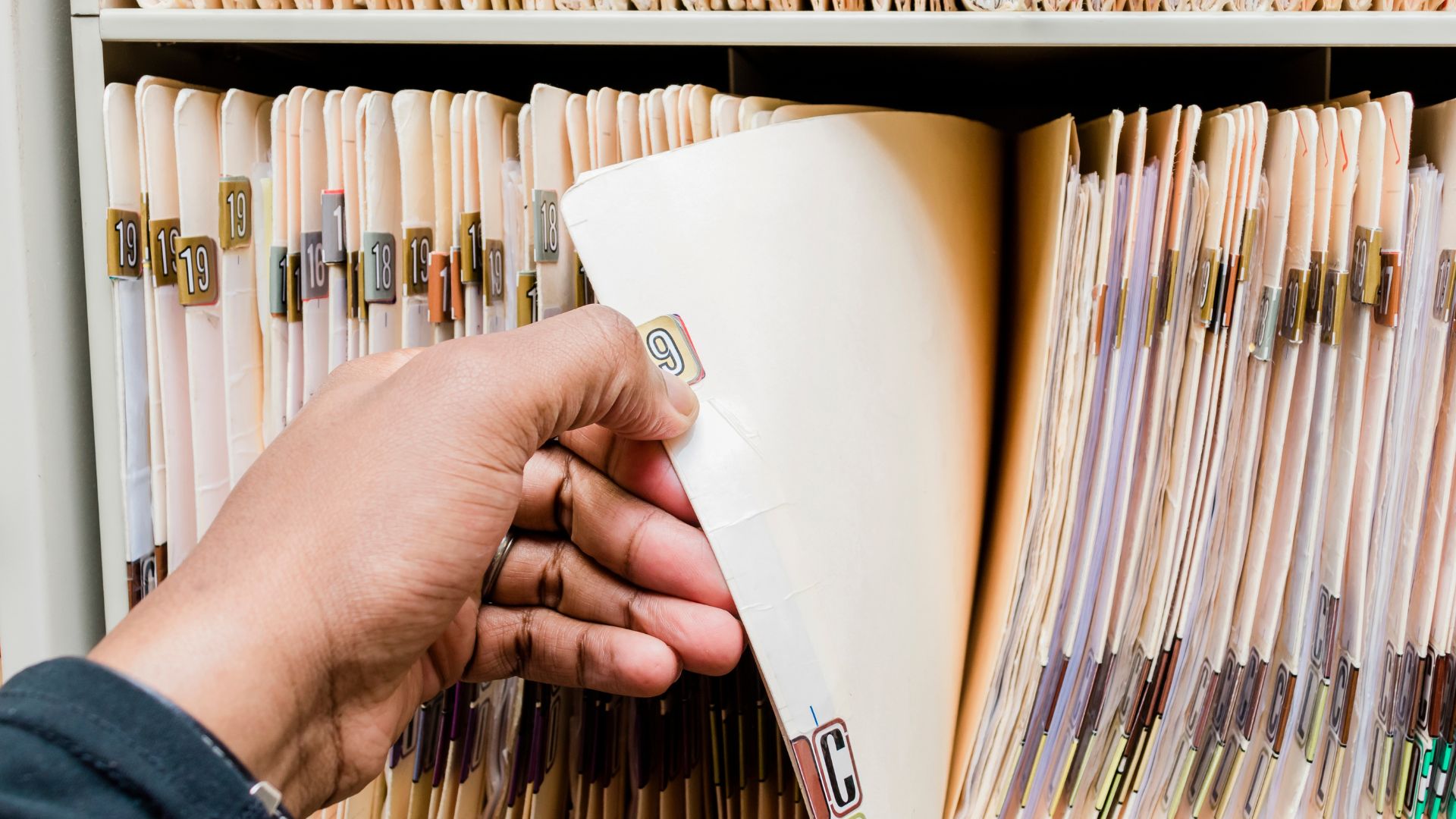
After perfecting your application, the final test is the mailing address. Fail this step, and your entire packet gets rejected or delayed for months. USCIS does not accept online submissions for Form I-485.
This is about the right protocol. Here’s the crucial intelligence you need to ensure your application lands on the right desk, the first time:
Family-Based Adjustment
- For applicants in this category, different states had different mailing addresses. For example, Texas has a mailing address like U.S. Postal Service (USPS):
- USCIS, P.O. Box 650288, Dallas, TX 75265-0288
- FedEx, UPS, and DHL: 2501 S. State Hwy. 121 Business
Suite 400, Lewisville, TX 75067-8003
Special Categories
For applicants in these categories, the filing location is based on your specific case and immigration status.
- T Nonimmigrant (Human Trafficking Victim):
- File with the USCIS Nebraska Service Center.
- USPS: Attn: I-485 T Box 87426, Lincoln, NE 68501-7526
- FedEx/UPS: 850 S St., Lincoln, NE 68508-1225
- File with the USCIS Nebraska Service Center.
- U Nonimmigrant (Crime Victim):
- File with the USCIS Nebraska Service Center.
- USPS: P.O. Box 87426, Lincoln, NE 68501-7526
- FedEx/UPS: 850 S St., Lincoln, NE 68508-1225
- File with the USCIS Nebraska Service Center.
- VAWA Self-Petitioner (Violence Against Women Act):
- File with the USCIS Nebraska Service Center.
- USPS: P.O. Box 87426, Lincoln, NE 68501-7526
- FedEx/UPS: 850 S St., Lincoln, NE 68508-1225
- File with the USCIS Nebraska Service Center.
Cuban Adjustment Act (CAA)
If you are applying under the Cuban Adjustment Act, your filing location depends on your specific Status.
- Abused spouses and children: File with the USCIS Nebraska Service Center.
- Other applicants under CAA: File based on your state of residence. Refer to the USCIS Lockbox for the correct address.
Special Immigrant Categories
For applicants in special immigrant categories, filing addresses depend on where you live. Always refer to the USCIS Lockbox for the correct filing address based on your state.
If you are filing your Form I-485 concurrently with your Form I-140 or have an approved I-140, the correct filing address is:
- With Form I-140:
- File with the USCIS Dallas Lockbox.
- USPS: P.O. Box 660867, Dallas, TX 75266-0867
- FedEx/UPS: 2501 S. State Hwy 121 Business, Suite 400, Lewisville, TX 75067-8003
- File with the USCIS Dallas Lockbox.
- With Form I-526 or I-526E (Investor-Based Petitions):
- File with the USCIS Dallas Lockbox.
- USPS: P.O. Box 660168, Dallas, TX 75266-0168
- FedEx/UPS: 2501 S. State Hwy 121 Business, Suite 400, Lewisville, TX 75067-8003
- File with the USCIS Dallas Lockbox.
Please note that the above information depends on which states you are in.
Asylum, Refugee, or Haitian Refugee Immigration Fairness Act
For applicants filing under Asylum, Refugee, or the Haitian Refugee Immigration Fairness Act:
- Asylum status applicants: File with the USCIS Phoenix Lockbox.
- Attn: NFB P.O. Box 21281, Phoenix, AZ 85036-1281
- FedEx/UPS: 2108 E. Elliot Rd., Tempe, AZ 85284-1806
For other locations, refer to the USCIS Lockbox for Elgin, Chicago, or Dallas.
Afghan and Iraqi Nationals
If you are an Afghan or Iraqi national, your filing address is:
- Afghan Nationals: File with the USCIS Phoenix Lockbox.
- Attn: AFGHAN-NFB P.O. Box 21281, Phoenix, AZ 85036-1281
- FedEx/UPS: 2108 E. Elliot Rd., Tempe, AZ 85284-1806
- Iraqi Nationals: File with the USCIS Phoenix Lockbox.
- USPS: P.O. Box 21281, Phoenix, AZ 85036-1281
- FedEx/UPS: 2108 E. Elliot Rd., Tempe, AZ 85284-1806
Removal Proceedings
Adjustment of status applicants in removal proceedings must file Form I-485 directly with the Immigration Court, not USCIS.
Other Filing Categories
For registry applicants, file based on continuous residence since before January 1, 1972. If you’re a Diversity Lottery Winner, then file based on eligibility under the lottery system. For Public Interest Parolees, you need to file for adjustment under the Lautenberg Amendment.
Employment-Based Categories Filing Form I-485 Concurrently with Form I-140
If you are filing Form I-485 concurrently with Form I-140, your filing address is:
With Form I-140: File with the USCIS Dallas Lockbox
- USPS (U.S. Postal Service): P.O. Box 660867, Dallas, TX 75266-0867
- FedEx, UPS, and DHL: 2501 S. State Hwy 121 Business, Suite 400, Lewisville, TX 75067-8003
If you are requesting premium processing for Form I-140, send your Form I-485, Form I-140, and Form I-907 together to the address listed in the Form I-140 filing instructions.
Got your application ready to go? Contact Sweta Khandelwal today for expert guidance and to ensure your green card journey stays on track.
Your application is in the mail. Now comes the hardest part: The wait. However, that wait isn’t a total mystery.
USCIS processing times follow patterns. In the next section, we’ll discuss how to set realistic expectations for the timeline ahead.
Processing Time and Fees
The USCIS processing time for Form I-485 can vary significantly, ranging from 10 to 47 months on average. This is under the employment-based category.
It depends on factors such as the applicant’s eligibility category, the USCIS service center, and the current workload.
The completeness of your application and response time to any Requests for Evidence (RFEs) can influence how long your application will take.
Fees to Consider
There are several fees associated with Form I-485, depending on your Status:
- Standard Fee: $1,440
- For Applicants Under 14: $950 (if submitting with one parent)
- For Certain U.S. Armed Forces Members: $0 (Special conditions apply)
Always check the latest fee schedule on the USCIS website to ensure you’re paying the correct amount.
Don’t sabotage your own application. After perfecting your forms and studying timelines, one overlooked mistake can still bring everything to a halt.
So, you need to tackle the most common and costly I-485 filing errors to avoid them completely.
Read Also: How to Speed Up the Marriage Green Card Process for Spouse
Common Mistakes to Avoid When Filing Form I-485

You’ve poured everything into your application. Before you seal the envelope, run through this final audit. These are the easily overlooked errors that trigger Requests for Evidence (RFEs). Check your work against this list. Here’s what to look out for:
Incomplete or Inaccurate Information
One of the most common mistakes applicants make is failing to provide complete and accurate information. Missing or incorrect details, such as incomplete addresses, incorrect dates, or missing signatures, can result in rejection.
Failing to Sign the Form
It’s surprising how many applicants forget to sign their Form I-485. An unsigned form will be automatically rejected by USCIS.
Incorrect Filing Fee
Double-check the filing fee before submission. The Fee for Form I-485 varies depending on your age and category, so it’s important to ensure you’ve submitted the correct payment. An incorrect fee will cause your application to be returned.
Skipping the Medical Exam
A required part of your Form I-485 application is the medical examination by a USCIS-approved doctor. Failing to include the Form I-693 (medical report) with your application will cause delays.
Not Updating USCIS with Address Changes
If you change addresses during the process, you must inform USCIS within 10 days of the move. Not updating your address could lead to missed notifications, such as interview invitations and Requests for Evidence (RFEs).
Don’t leave your green card journey to chance. The Law Offices of Sweta Khandelwal can assist you in steering clear of typical mistakes that could slow down your approval process.
Conclusion
You’ve learned what it takes to successfully file your I-485. You wrote the right address, understood the expected timeline, and the pitfalls to avoid. However, handling this process alone can still feel overwhelming.
That’s why we’re here. Think of us as your dedicated filing partner. We handle the crucial details, so you don’t have to. From meticulously preparing your packet to handling USCIS follow-ups, we ensure your application is audit-ready.
Contact the Law Offices of Sweta Khandelwal to make sure your I-485 application is filed correctly. Ensure your green card journey stays on track with Sweta Khandelwal‘s legal advice. The Law Offices of Sweta Khandelwal have enough expertise to handle the complexities of immigration law.
Disclaimer
Please note that the prices listed for visa services are estimates and may vary in real-time. We recommend consulting the official government websites or other authoritative resources for the most up-to-date pricing information. These estimates do not constitute a guarantee of costs, and fees may change without notice.
FAQs
- How long does the I-485 application process take?
The processing time for Form I-485 can range from 10 to 47 months, depending on the service center and your employment-based category. - What happens if my Form I-485 gets denied?
If your Form I-485 is rejected, you might be able to challenge the decision or submit a new application. - Do I need to include a medical exam with my Form I-485?
Yes, a medical examination is required for your adjustment of Status. You will need to submit Form I-693 signed by a USCIS-approved doctor.


