

Facing a visa denial after trying to switch from H4 to F1 status can feel like your American education dreams are slipping away in an instant.
Transitioning from H4 to F1 presents unique challenges, such as proving non-immigrant intent, documenting financial support, and meeting specific eligibility rules. Without the right understanding, applicants often make avoidable mistakes, delaying or derailing their plans.
In this guide, we’ll break down the root causes of H4 to F1 visa rejections, common pitfalls to watch for, and practical strategies to strengthen your application and improve your chances of approval.
Key Takeaways
- Key reasons for rejection include failure to demonstrate non-immigrant intent, insufficient financial documentation, and incomplete application forms.
- Ensure your filing is timely and accurate to maintain legal status and align your academic goals with USCIS expectations.
- Applicants must confidently explain their academic intent and financial stability to succeed during the visa interview.
- You can transition via U.S.-based Change of Status or faster consular processing abroad, depending on your travel needs.
- Regardless of the path chosen, submitting complete documentation and staying in status throughout processing is vital for approval.
Reasons for Transitioning from H4 to F1 Visa
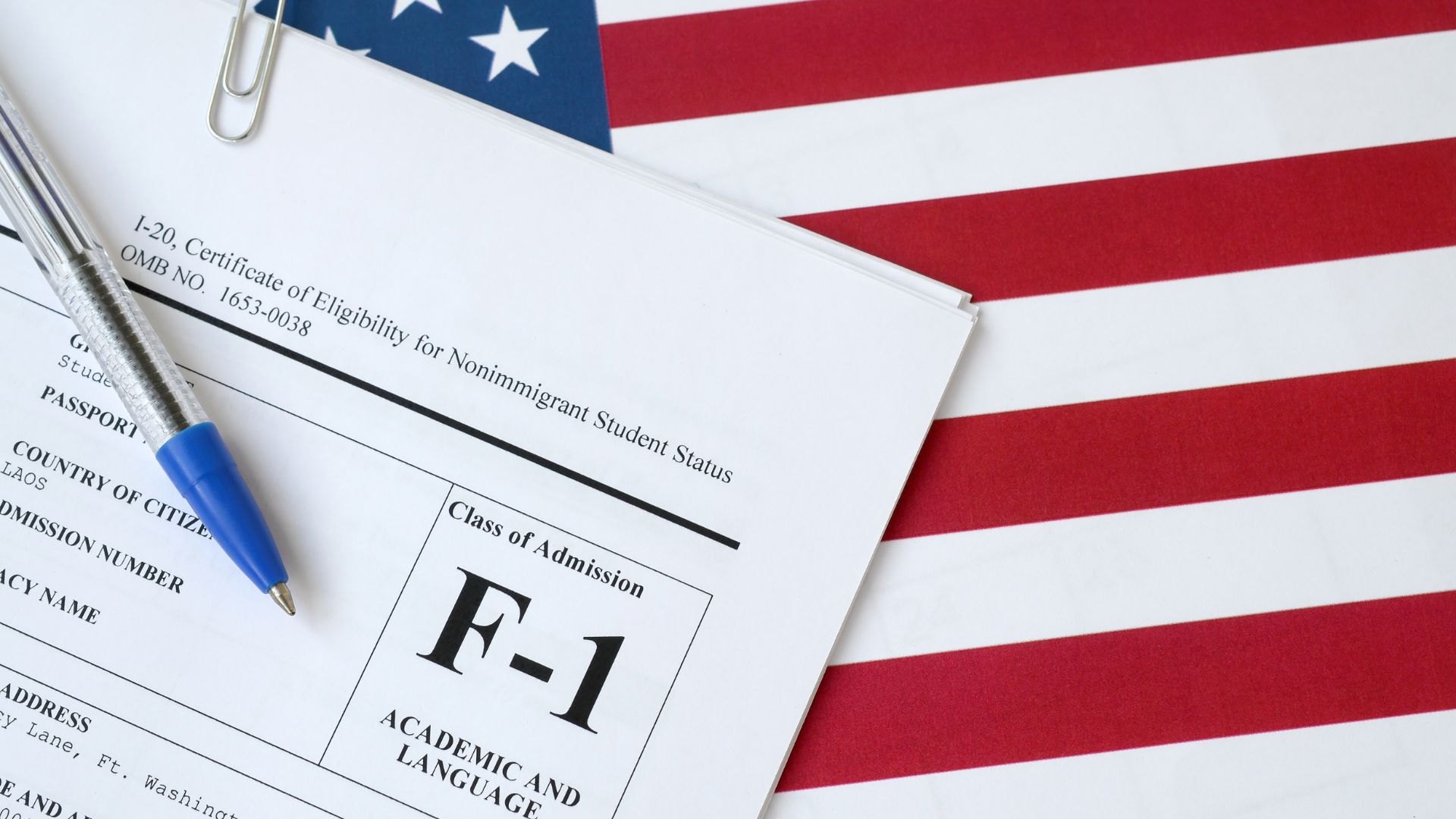
Many H4 visa holders can study full‑time in the U.S. without changing status, but there are key reasons why switching to F1 student status is a strategic choice rather than a mandatory one.
- Limited Work Options on H4: While H4 dependents may enroll in school, they generally cannot work in the U.S. unless they obtain a separate employment authorization (H4 EAD), which is not guaranteed.
- F1 Unlocks Practical Training: By obtaining an F1 visa, students can access Curricular Practical Training (CPT) during their studies and Optional Practical Training (OPT) after graduation, both of which provide work authorization.
- Independence from H1B Status: On F1 status, your stay and academic progress are tied to your student program rather than the H1B employer’s status, offering stability if a spouse’s job situation changes.
- Future Career Planning: F1 status, with its work opportunities, can strengthen experience for future employment or visa paths, such as H1B or employment‑based immigration.
Also Read: H4 Visas – Khandelwal Law
Top 8 H4 to F1 Visa Rejection Reasons
Understanding the common reasons for H4 to F1 visa rejections is essential for a smooth application process. From insufficient financial documentation to failure to demonstrate non-immigrant intent, these issues can jeopardize your chances of approval.
1. Failure to Demonstrate Strong Non‑Immigrant Intent
One of the most common reasons for H4 to F1 visa rejections is the failure to demonstrate non‑immigrant intent. U.S. immigration law requires that applicants prove they intend to stay in the country temporarily and plan to return to their home country after completing their studies.
2. Insufficient Financial Documentation
Another frequent cause of rejection is the inability to provide adequate financial documentation. F1 visa applicants must show they have enough financial resources to cover tuition fees, living expenses, and other costs while studying in the U.S.
If the financial documents are incomplete, unclear, or fail to prove the applicant’s ability to financially support themselves, the visa application is likely to be denied. This includes bank statements, affidavits of support, or financial guarantees that may not meet the necessary requirements.
3. Incomplete or Incorrect Application Forms
Errors or omissions in the application forms, such as the DS-160 (Nonimmigrant Visa Application) or I-539 (Application to Change Nonimmigrant Status), can lead to visa rejection. A single mistake, such as incorrect personal information or missing signatures, can delay or even prevent approval. It’s crucial that the application forms are accurate, complete, and properly signed to avoid processing issues and potential rejection.
4. Weak Academic Intent or Unclear Study Plan
A clear, well‑defined academic intent is essential for F1 visa approval. If the visa officer perceives that the applicant’s chosen field of study or academic program doesn’t align with their long‑term goals, or if they find a discrepancy between your DS-160 form and interview answers, it can lead to visa denial.
Also Read: Difference between DS160 and DS260 forms
5. Current or Previous Immigration Violations
Any immigration violations, such as overstaying a visa or working without authorization, can significantly harm an applicant’s chances of successfully changing from H4 to F1 status. U.S. immigration law is strict about maintaining lawful status, and past violations often lead to inadmissibility. Even if the applicant is in the U.S. on an H4 visa, any prior violations of immigration rules, such as working without authorization, may result in the denial of their F1 visa application.
6. Expired or Invalid Status at Filing
If the H4 status expires before the applicant files the change of status application (Form I-539), or if the individual fails to maintain a valid immigration status during the process, the application can be denied.
USCIS requires applicants to be in a valid status at the time they file an application for an F1 visa change. Any gaps in lawful status, such as overstaying an H4 visa, can complicate the approval process and lead to rejection of the application.
7. Failure to Maintain Full‑Time Enrollment Requirements
F1 visa holders are required to be enrolled full-time in an academic program at a SEVP-certified school. If the applicant is unable to prove their full-time enrollment or fails to meet the required academic standards, such as attending the required number of credit hours, the visa application may be rejected.
8. Evidence of Immigration Fraud or Misrepresentation
If the visa officer finds evidence of fraud or misrepresentation in your application, such as providing false documents, overstating financial capabilities, or making inaccurate claims about academic history, the consequences can be severe. U.S. immigration authorities take such offenses very seriously. Any misrepresentation can result in permanent inadmissibility, meaning you could be permanently barred from entering the U.S.
Also Read: Understanding Petitioner Name for H4 Visa Applications
A rejection doesn’t mean the end of your academic plans. The key is understanding exactly what went wrong and taking steps to address those specific issues before moving forward.
What to Do After an H4 to F1 Visa Rejection?
Receiving a visa rejection can be disheartening, but it’s important to stay proactive and focused. Understanding the reason behind the rejection and taking the right steps can help you improve your chances of success if you reapply.
- Understand the specific reason(s) for the denial. This will help you address the issues in your next application.
- If the rejection was due to non-immigrant intent, financial documentation, or incomplete forms, gather the documents and correct the mistakes.
- Seek professional help to ensure your next application is error-free and well-prepared, addressing any specific issues from the previous rejection.
- Depending on the reason for denial, you may need to reapply after correcting the issues, or you may be able to appeal if USCIS made an error.
- Ensure that you are still in a valid status while you address the rejection and reapply.
Once you’ve addressed any issues, you’ll need to decide which application route makes the most sense for your situation. The two available pathways differ significantly in processing time, convenience, and potential complications.
How to Transition from H4 to F1 Status: Two Paths to Change
When changing from H4 to F1 status, there are two distinct options for completing the process: travel and re-entry or changing status within the U.S. Both options have their pros and cons, depending on factors like timing, paperwork, and the need for travel. Understanding these options helps applicants choose the best approach based on their individual circumstances.
Option 1: Travel and Re-Entry
- Leave the U.S. to apply for an F1 visa at a U.S. embassy or consulate abroad.
- This route is typically faster and requires less paperwork compared to changing status within the U.S.
- Considerations: There’s a risk of delays in visa processing, and travel costs must be factored in.
Option 2: Change Status within the U.S.
- Stay in the U.S. and apply for a change of status through USCIS.
- This option allows you to remain in the U.S. during processing, which can take 3-6 months.
- However, if you leave the U.S. before approval, the application will be cancelled, and you must apply for the F1 visa at a consulate.
There are several procedural missteps that catch even well-prepared applicants off guard. These technical errors often stem from misunderstanding USCIS requirements or poor timing rather than eligibility issues.
How to Prevent H4 to F1 Visa Rejection: Real Pitfalls to Avoid
When applying to change from H4 to F1 status, the process isn’t just about meeting eligibility criteria; it’s also about understanding the nuanced procedural and documentation pitfalls that frequently trip up applicants.
- Not Filing Form I‑539 Correctly: Using the wrong form or submitting Form I‑539 with errors can lead to rejection since USCIS requires precise documentation for change of status requests.
- Application Timing Issues: Submitting the change of status after your current H4 status has expired, or too far ahead of the program start date, can result in denial. USCIS expects applications to align with status validity and program timelines to avoid gaps in lawful status.
- Failing to Maintain Valid Current Status: If your H4 status lapses before USCIS processes your change of status, your request may be denied. Maintaining continuous legal status up to and during processing is essential; a lapse creates uncertainty about your eligibility for the new student status.
- Lack of Clear Evidence of Lawful Admission: USCIS requires proof that you were legally admitted into the U.S., and that your current status was valid at the time of filing. Missing evidence, like the current I‑94 or previous approvals, can make it hard to verify lawful presence.
- Incorrect Handling of International Travel: Leaving the U.S. while your change of status is pending can automatically cancel your application, unless you withdraw it before departure. This is a common pitfall for applicants unaware that travel can jeopardize their pending I‑539 case.
- Misunderstanding SEVIS Fee and Records Requirements: Failure to pay the SEVIS I‑901 fee or linking it properly to your SEVIS ID/ I‑20 can result in processing issues or denials.
- Not Planning for Program Start Date: Your change of status must be timed so that the F1 status becomes effective by or before your academic program start date. If the timing doesn’t align, USCIS may deny it for creating gaps.
- Incomplete Supporting Evidence for Lawful Stay: Not providing a complete history of your prior entries and status maintenance (e.g., previous I‑94 records) can leave gaps in your application.
Conclusion
Changing from an H4 to an F1 visa status offers significant benefits for individuals wishing to study in the U.S., such as access to CPT/OPT work options and greater academic independence. However, it also presents several challenges that can lead to rejection if not carefully managed.
Key reasons for rejection include failure to demonstrate non-immigrant intent, insufficient financial documentation, incomplete forms, and timing issues with H4 status. Understanding these potential pitfalls and preparing thoroughly for the application process can improve your chances of approval.
The Law Offices of Sweta Khandelwal offers specialized legal assistance to individuals navigating the H4 to F1 visa transition. With extensive experience in immigration law for students, Sweta Khandelwal’s team ensures that your application is carefully prepared and compliant with U.S. immigration requirements.
Contact us today for expert guidance on your H4 to F1 visa application and take the next step towards your educational journey in the U.S.
FAQs
1. Are there any reasons for H4 EAD rejections?
Yes, H4 EAD applications can be rejected for various reasons, including incomplete forms, insufficient documentation, or if the primary H1B holder’s status is not valid. Other common issues include not meeting the eligibility requirements or errors in submitting supporting documents.
2. How long will it take to convert H4 to F1?
Converting H4 to F1 status through Form I-539 can take 3 to 6 months. If applying for consular processing (via a U.S. embassy or consulate), it typically takes several weeks to a few months, depending on the embassy’s processing times.
3. Can I reapply if my F1 visa is rejected?
Yes, you can reapply if your F1 visa is rejected. It’s crucial to address the reasons for rejection and correct any issues in your application, whether it’s related to documentation, intent, or eligibility, before reapplying.
4. What is a red flag in a US visa?
A red flag in a U.S. visa application can include misrepresentation, discrepancies in documents, lack of clear non-immigrant intent, or failure to demonstrate financial ability to support your stay. These issues can raise doubts about your eligibility or intentions.
5. What is the 5-month rule for F1 students?
The 5-month rule refers to the requirement that F1 students must remain enrolled full-time in a SEVP-certified school. If a student is absent for more than 5 months without proper authorization or a change in status, they may fall out of status and lose their ability to remain in the U.S. as a student.


