

If you’ve ever Googled tax guidance for immigrant visa holders, you’ve probably seen generic articles that explain nothing clearly. Those are skipping the parts you actually care about, or make you feel like you need someone to translate the basic rules.
If you’re on an H-1B with an H-4 spouse, the frustration hits even harder because the rules involve immigration, tax forms, etc. In this blog, we break that pattern, as, after working in this field for more than a decade, we’ve gathered immense experience.
We’ll explain how to file taxes for H-1B and H-4 visa holders without turning it into an accounting lecture. You’ll learn what really applies to you, what most blogs skip, and what you should prepare for before tax season arrives.
A Quick Glance of the Blog
- FICA applies to H-1B wages and to H-4 wages only with an Employment Authorization Document (EAD).
- State tax filing depends on the state, not the visa. Some states have zero income tax.
- Most households benefit from Married Filing Jointly, but Married Filing Separately (MFS) is allowed when needed.
- The Substantial Presence Test determines whether you file as a resident (1040) or nonresident (1040NR).
- Clean tax filings support future immigration milestones and financial documentation needs.
Why Filing Matters and When You’re Expected To Do It?

Tax season shapes your financial record and protects you from penalties that many people don’t even know exist. Most families on temporary visas underestimate how important timing and accuracy are, especially when both immigration and tax rules overlap.
So, why must taxes be filed?
Staying compliant isn’t optional in the U.S., and accurate filing is the foundation of your financial and immigration record.
1. Federal compliance: The Internal Revenue Service (IRS) requires every taxpayer with U.S. income to report it, regardless of visa type. IRIS is the U.S. federal government agency responsible for collecting taxes and enforcing the nation’s tax laws
2. Refund eligibility: If too much tax was withheld from your paychecks, filing is the only way to get that money back.
3. State and local obligations: Your location and work situation determine whether you owe state tax, local tax, or both.
4. Immigration advantages: Clean, consistent tax filings support future immigration steps, including extensions and permanent residency applications.
Just another reminder: Timing sets the structure of your entire tax year, and missing deadlines can lead to automatic penalties.
- Federal deadline (April 15): This is the standard due date for your yearly federal return.
- Extension timelines: Filing Form 4868 gives you until October 15 to submit your return, though it doesn’t extend the time to pay tax owed.
- State deadlines: Many states share the same April 15 deadline, but a few operate on slightly different calendars.
- H-4 ITIN timing: Households filing jointly and applying for an H-4 ITIN must mail the federal return with Form W-7, which may require allowing extra time for processing.
These dates shape your entire filing rhythm and help you prepare documents and avoid unnecessary delays. Before you think about deadlines or refunds, the first question is whether you’re even required to file at all.
Also Read: Securing H-1B Visa Extension Beyond the 6-Year Limit
Who Must File Taxes?
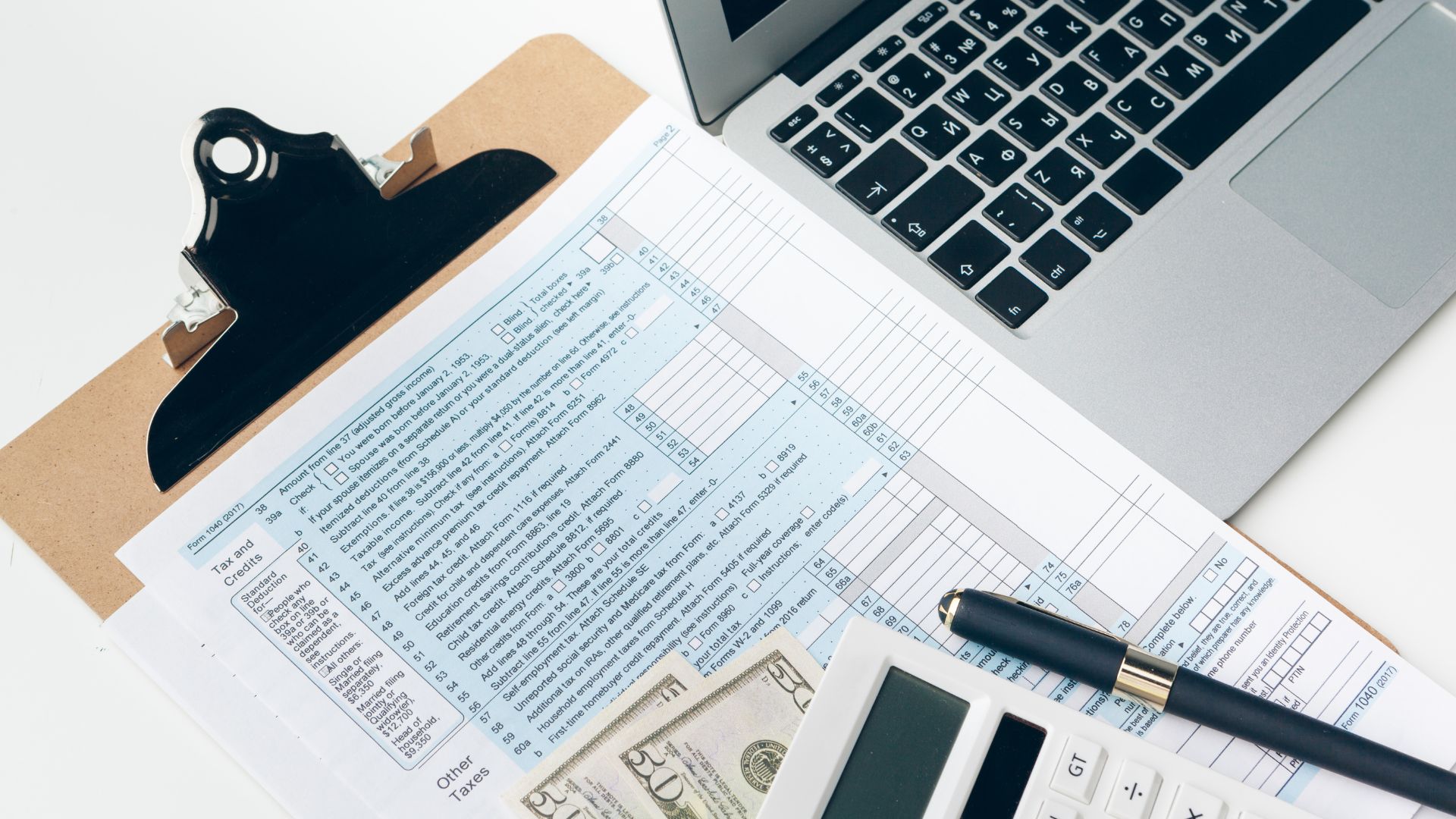
A quick disclaimer: The rules are based on income, presence in the U.S., and whether the IRS considers you a resident for tax purposes. If you miss this, you could either file when you didn’t need to, or worse, not file when you should have.
Once we get into filing taxes as H-1B and H-4 visa holders, the eligibility criteria make a lot more sense. Here’s who the IRS expects to file:
1. H-1B workers earning U.S. wages: If you receive a W-2 from a U.S. employer, you’re expected to file a federal return. In many cases, a state return is required, regardless of how long you’ve been in the country.
2. H-4 spouses earning income through an EAD: Employment Authorization Document (EAD) opens the door to salary, freelancing, or side gigs.
3. Households that meet the Substantial Presence Test: This IRS test determines if you count as a U.S. tax resident. Many long-term H-1B holders pass it without realizing it.
4. Individuals with investments or other taxable events: Dividends, interest, brokerage accounts, crypto trades, or even certain unemployment benefits can require reporting.
5. Married couples choosing a joint or separate filing status: If you’re married, you cannot file as “Single.” Your options are Married Filing Jointly (MFJ) or Married Filing Separately (MFS).
6. H-4 spouses seeking an ITIN to be included on a return: If an H-4 spouse doesn’t have a Social Security Number, the IRS requires an ITIN to list them on a federal return. This is especially true if the couple wants to file jointly.
If you’re unsure whether you should file or if you’re stuck between joint and separate filing, reach out to The Law Offices of Sweta Khandelwal.
Now that you know who must file, the next thing most H-1B/H-4 households ask is: What taxes are we actually talking about?
3 Types of Taxes That Apply to H-1B and H-4 Households

Some taxes are deducted automatically from every paycheck, others require forms in April, and some depend on which state you live in or work in. Understanding these differences matters because it affects how much you owe and what refunds you qualify for during the year.
Once you learn how to file taxes, H-1B to H-4, it becomes clear that there are three major tax categories affecting immigrant households:
1. Federal Income Tax
Federal income tax is the annual tax you reconcile with the IRS. Your employer usually withholds part of it throughout the year, and you settle the final numbers when you file your return.
Residency Rules (Important for H-1B/H-4 Filers)
Tax residency determines how you file:
- If you pass the Substantial Presence Test, you file as a resident
- If you do not pass it, you file as a nonresident
The form changes accordingly:
- Form 1040 for residents
- Form 1040NR for nonresidents
This difference affects deductions, credits, and sometimes refund outcomes.
Required Documents
To file federal taxes, households typically need:
- W-2 forms for wages
- 1099-INT for bank interest
- 1099-DIV for dividends
- 1099-NEC or 1099-K for contract/gig income
- Brokerage/crypto statements, if applicable
- Social Security Number (SSN) for H-1B and H-4 EAD holders
- ITIN for H-4 spouse without SSN (if included in filing)
Here’s the Workflow for Federal Filing
1. Determine tax residency using the Substantial Presence Test
2. Choose filing status (Married Filing Jointly or Married Filing Separately)
3. Prepare the tax return using software or a preparer
4. Submit electronically or by mail
Federal returns are usually:
- E-filed through tax software
- Filed by mail if applying for an ITIN for an H-4 spouse using Form W-7
Households that rely on ITIN processing should plan early because mailing can delay refunds.
Federal deadlines follow a strict schedule:
- April 15: Annual deadline
- October 15: Extended deadline if you request an extension
2. Social Security & Medicare (FICA)
FICA taxes fund retirement and healthcare programs. They operate differently from federal income tax and do not require an annual filing.
Required Documents
For FICA tracking, you only need:
- W-2 showing withheld Social Security and Medicare
How FICA is Filed
You don’t “file” FICA. Instead, it is:
- Withheld automatically from each paycheck
- Recorded on your W-2
- Sent to Social Security and Medicare by your employer
FICA is collected:
- Every paycheck, not once per year
- It is not tied to April 15
If you aren’t sure which taxes apply to your household, Contact the Law Offices of Sweta Khandelwal to get practical guidance for your specific situation.
3. State and Local Income Taxes
State and sometimes local agencies tax income separately from the federal government. This depends on where you live and work, not your immigration status.
Required Documents
State filing often requires:
- W-2 forms
- State withholding info
- Proof of residence, if needed
- Prior year state return (optional but helpful)
How State Tax is Filed
States have their own filing systems. Returns may be:
- E-filed through approved software
- Filed by mail
- Submitted through state portals
For example:
- California → CA 540
- New York → IT-201
Most states align with the federal calendar:
- April 15: Standard deadline
- Extensions vary but usually mirror federal extensions
Tax rules are a lot easier to understand when you see how they play out in real households. Not every H-1B family looks the same, and your filing experience changes depending on authorization and even geography.
Also Read: H-1B Visa Quota: Timeline and Requirements Explained
4 Common H-1B/H-4 Scenarios You’ll See During Tax Season

Most immigrant families don’t fit the standard “two U.S. citizens, both with W-2s, filing jointly” model that most online guides assume. The mix of visa types, employment authorization, and relocation patterns creates unique filing situations.
In reality, small differences change how you prepare documents and how you file. Below are real-world situations H-1B households face, and how they impact your filings:
Scenario 1: H-1B Worker With an H-4 Spouse Who Has No Income
This is one of the most common setups in immigrant households. Here’s how it generally works:
- The H-1B worker receives wages through a W-2
- The H-4 spouse doesn’t have an EAD or hasn’t used it
- Only one person in the household earned reportable U.S. income
Scenario 2: H-1B Worker and H-4 Spouse With EAD (Both Earning Income)
This scenario creates a dual-income household. Here’s how it looks in practice, both spouses:
- Receive W-2s or income statements
- Pay federal tax based on their wages
- Pay FICA taxes through payroll
- Are allowed to file together or separately
Scenario 3: H-1B Remote Worker Across States
Remote work changed state tax dynamics for many immigrants. Moving from one state to another can trigger multi-state filings. For example:
- Living in Washington (no state income tax)
- Working for an employer in California (state income tax)
- Or moving mid-year from New York to Texas
Scenario 4: First-Time Joint Filing With an H-4 Spouse Needing an ITIN
This one surprises most couples. If your H-4 spouse doesn’t have a SSN and you want to file jointly, the IRS requires you to obtain an ITIN (Individual Taxpayer Identification Number).
Here’s how that usually plays out:
- The H-4 spouse lacks an SSN
- You choose Married Filing Jointly
- You attach a Form W-7 to your federal return
- You file by mail instead of e-file
- The IRS assigns an ITIN after processing
If your household fits one of these situations, contact Sweta Khandelwal to get clarity before the filing season becomes overwhelming.
Final Thoughts
Every H-1B family enters tax season with a mix of questions and worries. You’re earning in a new country, learning a new system, and trying to make the right choices for your future. Filing keeps your records clean, makes refunds possible, and supports the immigration journey you’ve worked so hard to build.
After learning how to file taxes H-1B H-4, the process feels less like a burden and more like a routine you can handle with confidence each year. If you’re at a point where you want to avoid costly mistakes, the right legal guidance can make all the difference.
Contact the Law Offices of Sweta Khandelwal to understand how tax filings intersect with your immigration goals and timelines.
Reach out to The Law Offices of Sweta Khandelwal if you need guidance on how tax records affect future applications. If you’re ready to take the next step, speak to Sweta Khandelwal and make sure your next filing season works in your favor instead of against you.
FAQs
1. Can an H-4 spouse be part of a joint tax return if they have no income?
Yes. An H-4 spouse can be included on a joint return. If they don’t have an SSN, they’ll need an ITIN.
2. Can a married H-1B filer choose “Single” on their tax return?
No. Married taxpayers must file as Married Filing Jointly or Married Filing Separately.
3. Does an H-4 spouse without an EAD need to file a separate tax return?
No. If the H-4 spouse has no income, they do not file separately. They appear on the H-1B spouse’s return if filing jointly.
4. Does an H-1B worker pay Social Security and Medicare taxes?
Yes. These payroll taxes apply to H-1B wages. H-4 spouses pay them only if they work under an EAD.
5. Do H-1B households always need to file a state return?
Not always. It depends on where you live or work. Some states have no income tax, while others do.


